
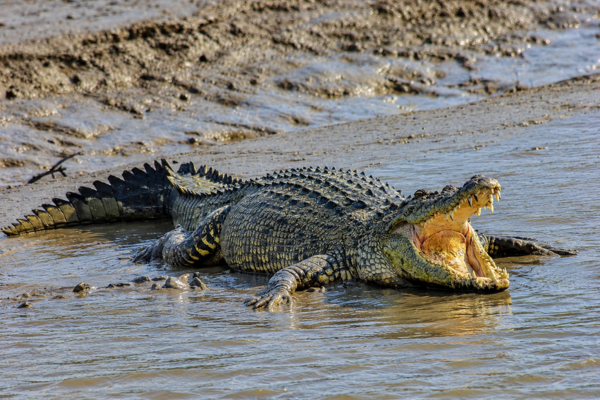
The Sundarbans is famous for its Royal Bengal Tigers, but another powerful predator quietly rules its rivers and muddy banks—the estuarine crocodile. These ancient reptiles are an important part of the Sundarban ecosystem and can sometimes be seen resting near creeks, swimming through tidal waters or basking along exposed riverbanks. For wildlife lovers, spotting a crocodile in its natural habitat can be one of the most exciting moments of a Sundarban journey.
1. Meet the Estuarine Crocodile
The crocodiles found in the Sundarbans are mainly saltwater or estuarine crocodiles. They are well adapted to both fresh and brackish water and can survive in the constantly changing tidal environment of the mangrove forest.
Their strong bodies, powerful jaws and excellent swimming ability make them highly effective predators.
2. Where Crocodiles Live in the Sundarbans
Crocodiles prefer quiet creeks, muddy riverbanks, mangrove channels and shallow tidal areas.
You may spot them:
- Resting on exposed mudflats
- Floating quietly near the water surface
- Swimming across narrow creeks
- Hiding close to mangrove roots
- Basking in sunny areas near riverbanks
Because they blend naturally with the muddy surroundings, careful observation is often required.
3. Why Tides Matter
Tides play an important role in crocodile sightings.
During low tide, muddy banks become exposed, giving crocodiles places to rest and warm themselves in the sun. This can improve the chances of seeing them from a safari boat.
During high tide, crocodiles may move deeper into creeks and channels, making sightings less predictable.
4. Crocodiles as Powerful Predators
Estuarine crocodiles are opportunistic hunters. Their diet may include fish, crabs, birds, reptiles and other animals found around the waterways.
They often remain still for long periods before making a sudden movement. This patient hunting style makes them highly effective predators in the mangrove environment.
5. Best Time to Watch for Crocodiles
Crocodiles can be present throughout the year, but sightings often depend on:
- Tide conditions
- Weather
- Water level
- Time of day
- Safari route
- Disturbance around the area
Early mornings and quieter river stretches can provide better wildlife-watching conditions.
6. Crocodiles and the Sundarban Ecosystem
Crocodiles are not just dangerous predators—they also play an important ecological role.
As top predators, they help maintain balance in aquatic food chains. Their presence is a sign of a healthy wetland and mangrove environment.
Protecting crocodiles also means protecting the rivers, mudflats, mangrove forests and many other species that depend on the same habitat.
7. Safety During a Crocodile Safari
Visitors should always follow forest and boat safety rules.
Important precautions include:
- Never place hands or feet outside the boat
- Avoid standing too close to the edge
- Do not feed wildlife
- Follow the guide’s instructions
- Keep children supervised
- Maintain a safe distance
- Avoid making loud noises
Responsible behaviour protects both visitors and wildlife.
8. More Than Just a Crocodile Sighting
A crocodile safari in the Sundarbans is about much more than seeing one animal. The journey itself takes you through peaceful rivers, narrow creeks, mangrove forests and wildlife-rich landscapes.
Along the way, you may also see spotted deer, wild boars, monitor lizards, kingfishers, eagles and other animals.
The thrill comes from not knowing what may appear next.
For wildlife enthusiasts and photographers, seeing an estuarine crocodile resting silently on a muddy bank is an unforgettable experience. These hidden predators are an important part of what makes the Sundarbans one of India’s most fascinating natural destinations.
Sundarban Travel Guide
Sundarban Crocodiles: Hidden Predators of the Mangrove Forest
Planning Tip
Conditions in the Sundarban can change because of tide, weather, local rules and seasonal access. Confirm your final itinerary, transfer timing and forest route close to your travel date.
Plan Your Sundarban Journey
Ready to Explore the Sundarban?
Explore our tour packages or create a customised Sundarban travel plan based on your preferred duration, pickup point and group size.
Plan a Sundarban Trip